
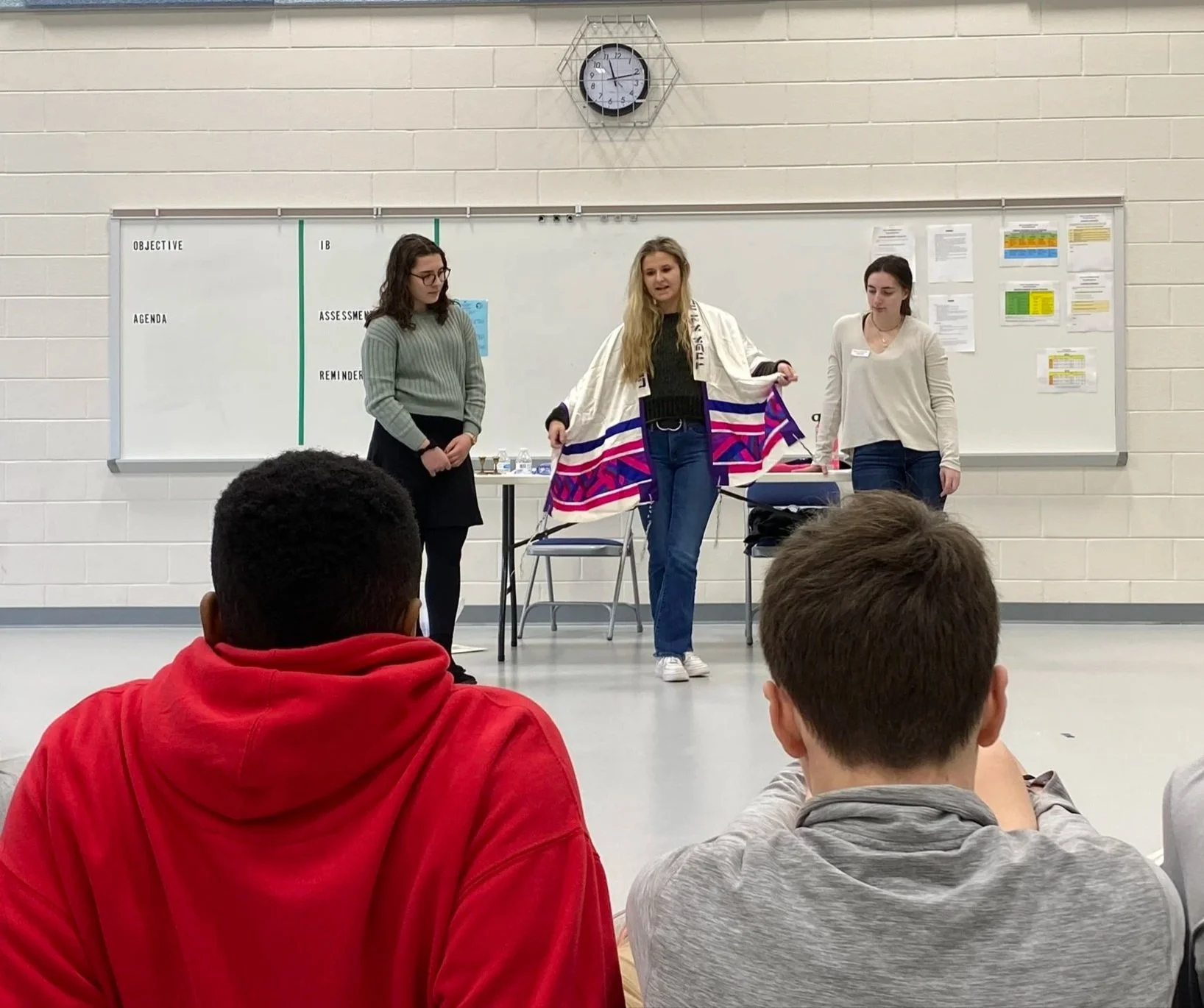
Photo courtesy of Be the Narrative
Confronting Antisemitism
These grants support organizations that are developing positive, constructive, and scalable efforts to understand, expose, and undermine contemporary antisemitism. We are interested in initiatives that help groups navigate and address antisemitism within their communities; build bridges between Jews and other minority groups; address systemic and curricular antisemitism in K-12 schools and universities; utilize technology; and empower individuals with the tools, knowledge, and resources to effectively advocate for themselves and the Jewish people.
We are grateful to the William Davidson Foundation for amplifying and deepening the committee’s grantmaking and allowing them to fund more grantees at significant levels.
You can find last year’s RFP here.
*Starred grantees are new to this committee in 2026–2027
-

The American Jewish Medical Association (AJMA) is the only national organization representing Jewish healthcare professionals and students across disciplines (i.e., doctors, nurses, psychologists, etc.). AJMA promotes Jewish values and ethics in medicine, stands strongly with Israel, and addresses contemporary issues affecting members and society, notably antisemitism in patient care, academia, medical societies, research programs, and the healthcare community more broadly. Natan’s grant will allow AJMA to improve its antisemitism reporting system, expand outreach to more Jewish healthcare professionals, and develop a curriculum on antisemitism and cultural sensitivity for medical and nursing schools.
-

The American Muslim & Multifaith Women’s Empowerment Council* (AMMWEC) empowers credible Muslim voices (primarily in the US and South Asia) to openly reject antisemitism, challenge Islamist ideology, and promote faith-based values rooted in dignity, coexistence, and moral responsibility. At the same time, it engages policymakers, civil society, and interfaith partners to expose how Islamist movements exploit identity and grievance to undermine social cohesion. It is very active in social media efforts aimed at South Asian muslims in South Asian languages (i.e., Urdu and Punjabi).
-

The Bay Area Center for Confronting Antisemitism (BACCA) is committed to safeguarding the wellbeing of the local Jewish community by empowering, coordinating, and amplifying the efforts of local grassroots groups. BACCA is developing this CCA model that will provide backend support, infrastructure, and organizational know-how to grassroots activists and volunteers, which could be replicated in other communities across the country. Natan’s renewal grant enables BACCA to expand its professional support for more Bay Area hubs, develop more online resources, and expand its outreach efforts.
-
BAMAH* is a cultural dialogue and exchange organization that uses arts to strengthen understanding between communities and preempt antisemitism at its earliest stages. Its core program places Israeli artists on semester-long residencies at HBCUs. Because HBCUs educate a disproportionate share of the nation’s emerging Black leaders, these campuses are critical spaces for addressing antisemitism before misinformation, inherited stereotypes, and online narratives take root.
-

Be the Narrative (BTN) runs the Student to Student (STS) program, a peer-to-peer dialogue experience that trains Jewish high school students to be Jewish ambassadors and presenters in classrooms in the US and Canada. BTN’s diverse Jewish student presenters work together to share their individual Jewish narratives and identities in public and private schools with students who have little to no experience with Judaism. BTN partners with JCRCs and local federations who manage the local STS program in their respective communities.
-

Blue Compass* strengthens the nonprofit and philanthropy sector by supporting Jewish professionals navigating antisemitism, isolation, and exclusion in secular workplaces and by helping organizations build greater capacity for belonging, dialogue, and trust. Blue Compass provides community, practical tools, and training through Compass Connect; facilitated peer circles; regional convenings; and partnerships with nonprofits themselves, allowing them to build a more resilient and inclusive nonprofit ecosystem.
-
The Tell Institute* educates American middle and high schools students about recurring patterns of antisemitism and the ideas that shape free, pluralistic societies. This interactive, adaptable curriculum can be easily incorporated into public and private schools’ World Civilization and Holocaust mandates, allowing educators to teach about the "Big Lies" undermining the Jewish people, freedom, and pluralism through critical thinking and student-centered learning. This curriculum is also being adapted, per the large demand, for supplementary Hebrew school and Jewish day school curriculums.
-

West Point Association of Graduate’s Resnick Center for Holocaust & Genocide Studies is organizing the Program for Ethical Leadership and Integrity (PELI), a two-day intensive seminar for West Point cadets. This specialized program focuses on Holocaust education, promoting ethical leadership, countering antisemitism, and reinforcing democratic principles among cadets. As part of this initiative, cadets will spend a day at the US Holocaust Memorial Museum in DC. Cadets will be surveyed after the program to understand its impact and a faculty review will be held to design an after-action report.